Lotus Flower Pattern: A Designer’s Real-World Embroidery Review
First Impression: Elegant, Calm — But Does It Stitch Clean?
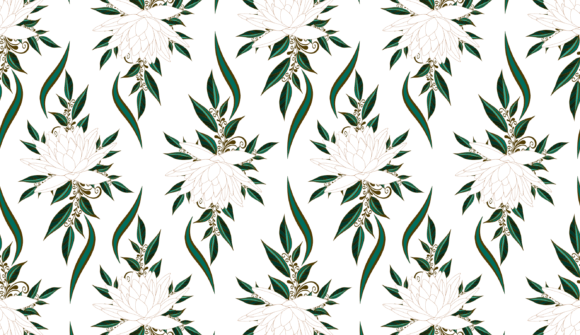
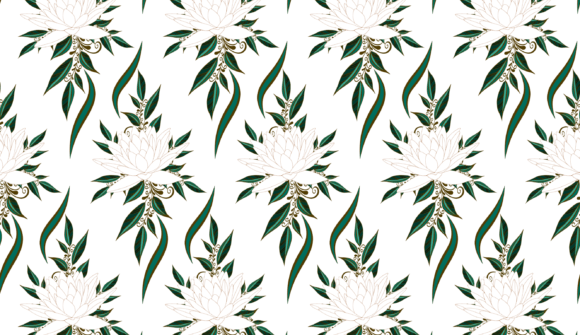
When I opened the Lotus Flower Pattern, my eye went straight to its quiet confidence: a white lotus with slender green-gold branches, floating on transparency. No clutter. No forced symmetry. Just organic flow and modern restraint. It feels like a breath of air—ideal for mindful branding, wellness-focused apparel, or boutique baby items. But elegance doesn’t always translate to stitch-ready clarity. So before I pinned it to fabric, I asked: *Will this hold up in satin stitch? Will the branches fray on thin cotton? Will customers see “handmade care” or “digital shortcut” when they hold the finished product?*
Real Project Test: Embroidering a Linen Tote Bag for a Local Apothecary
I used the Lotus Flower Pattern as a center motif on a natural linen tote—intended for a small herbal shop launching a seasonal gift line. The design scaled cleanly at 4.2" wide, sitting just above the base seam. On screen, the seamless repeat hinted at wallpaper potential—but for embroidery, I used only one tile, not the full pattern. Why? Because repeating florals can overwhelm stitching density on medium-weight woven fabric. The white petals stayed crisp; the green-gold stems held definition without bleeding into fill-stitch zones. No jagged edges. No lost detail in the calyx curves. That’s rare in vector-to-embroidery conversions—and a strong sign this was crafted with real thread in mind.
Where It Shines (and Where It Needs Caution)
- Custom apparel: Works beautifully on sweatshirt cuffs, back yokes, and chest pockets—especially on heather grey or oatmeal knits. The lotus reads as intentional, not decorative filler.
- Baby embroidery: Soft white + muted green-gold reads gentle and gender-neutral. Perfect for onesies, burp cloths, or crib mobile accents—if stitch density is reduced slightly to avoid stiffness.
- Embroidered patch: Clean outlines and open negative space make it ideal for twill or chenille patches. No tiny interior gaps that trap lint or fray.
- Holiday & wedding gifts: Feels ceremonial without being ornate—great for monogrammed tea towels, pillow covers, or guestbook sleeves.
- Etsy seller advantage: Stands out in search results for “minimal floral embroidery” or “modern botanical design”—but only if paired with honest mockups showing actual stitch texture, not just flat vector previews.
Fabric & Fit Reality Checks
This isn’t a one-size-fits-all machine embroidery design. Its grace depends on context:
- Avoid tight hoops under 3”: Those delicate branch tips need breathing room. Below 3", they risk becoming blunt or misaligned.
- Textured fabrics (like terry cloth or bouclé): Can mute stem definition. Add a tear-away + cut-away stabilizer combo—and test first.
- Dark or black fabric: White thread pops, but green-gold may fade visually unless you switch to metallic or high-sheen rayon. Always test thread colors on your target base.
- Stretchy knits (e.g., baby bodysuits): Use topping stabilizer. Without it, the lotus outline can “swim” during hooping.
- Curved surfaces (caps, beanies): The central bloom works—but avoid placing stems near the crown seam where distortion skews proportions.
What It Adds to Your Handmade Product — and What It Doesn’t
The Lotus Flower Pattern elevates perceived value—not because it’s flashy, but because it signals intention. Customers notice when a design respects negative space, balances weight, and avoids visual noise. That translates directly to trust: a shopper choosing a custom embroidered pillow cover sees craftsmanship, not clip art. For craft businesses, it supports brand consistency across product lines—say, matching aprons and kitchen towels for a café launch. And yes, it boosts giftability: people love giving something that feels serene, personal, and quietly meaningful.
But let’s be clear—it won’t fix poor execution. If your stitch density is too high, those petals will pucker. If you skip stabilizer on lightweight cotton, the green-gold stems will tunnel. This is a strong digital embroidery file, not a magic wand.
Practical Notes Every Embroidery Designer Should Run Through
- Test the Lotus Flower Pattern on scrap fabric matching your final project’s weight and weave.
- Check contrast in both light and dark thread combos—especially on mid-tone fabrics like sage or clay.
- Review stitch density: reduce fill stitch % by 5–10% for baby items or lightweight linens.
- Confirm hoop size compatibility—don’t assume it fits standard 4x4 without measuring the bounding box.
- Inspect small details at 200% zoom: are stem ends tapered? Are petal edges smooth, not pixelated?
- Use black-and-white mockups to assess silhouette strength—does the lotus read clearly without color cues?
- Verify stabilizer type: cut-away for knits, tear-away for stable wovens, topping for napped surfaces.
- Double-check licensing terms before selling finished items or bundling it into digital product kits—this falls under Graphics, not public domain.
Final Thought: A Quiet Design With Real Weight
The Lotus Flower Pattern won’t shout from a craft fair table—but it’ll draw people in. It suits makers who value subtlety over saturation, precision over padding, and meaning over mass appeal. Whether you’re embroidering a personalized gift for a new parent, building a cohesive line for your small shop, or sourcing reliable design assets for client work, this pattern earns its place—not as background filler, but as thoughtful foreground language. Just remember: even the most elegant embroidery file needs your hand, your judgment, and your respect for how thread meets fabric. Try it. Test it. Then let the lotus bloom—stitch by careful stitch.